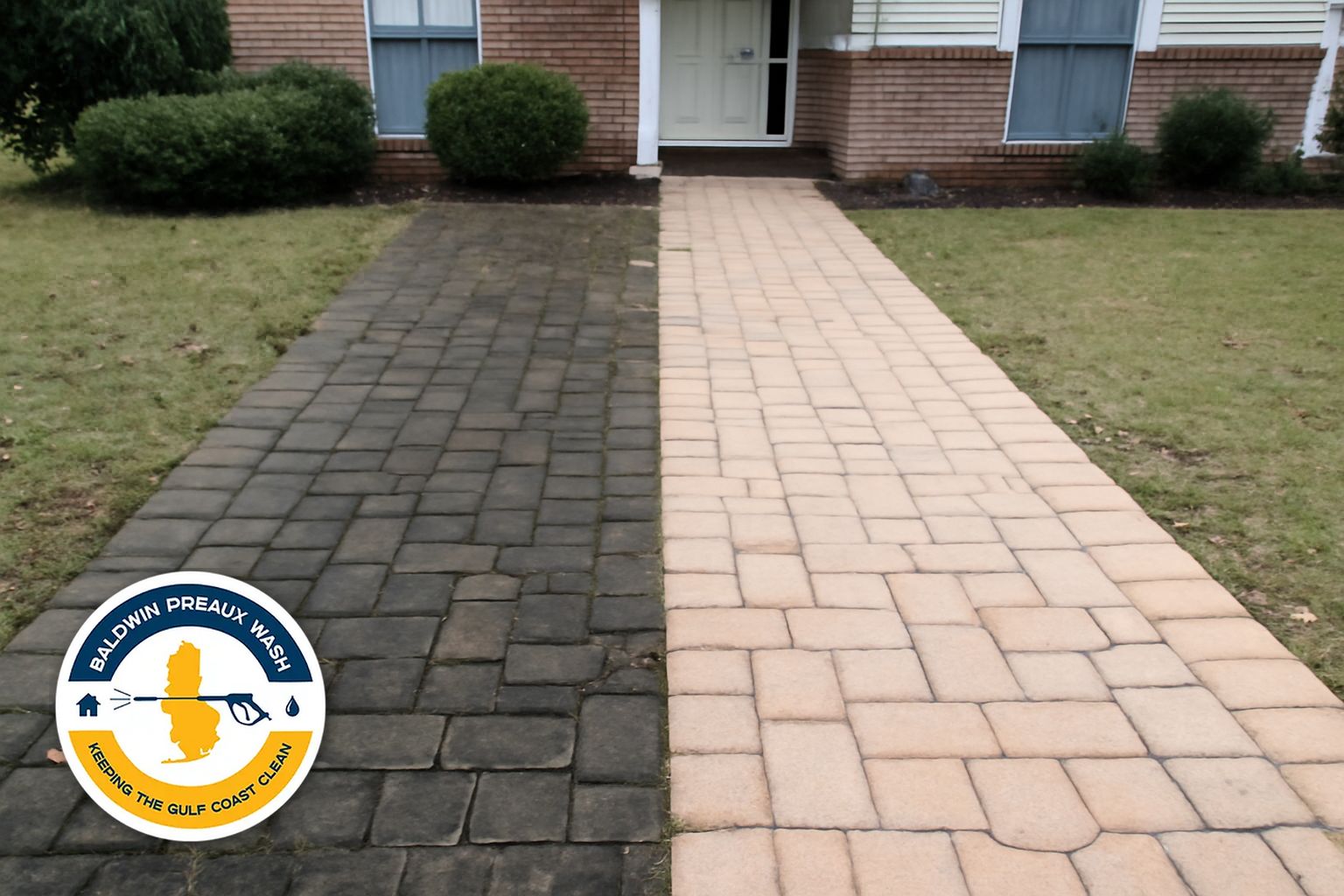
If you live in Midtown Mobile or Spring Hill, you've probably noticed how fast paver patios and driveways start to look rough. The combination of Gulf Coast humidity, afternoon heat, and the way rainwater just sits on flat surfaces creates a perfect environment for algae, mildew, and weed growth in the joints. What started as a clean, sharp patio three or four years ago can end up looking like something you're embarrassed to point out to company. Baldwin Preaux Wash handles paver cleaning and sealing throughout Mobile, Alabama, zip codes 36608, 36609, 36693, and surrounding neighborhoods, and we've seen this story play out hundreds of times.
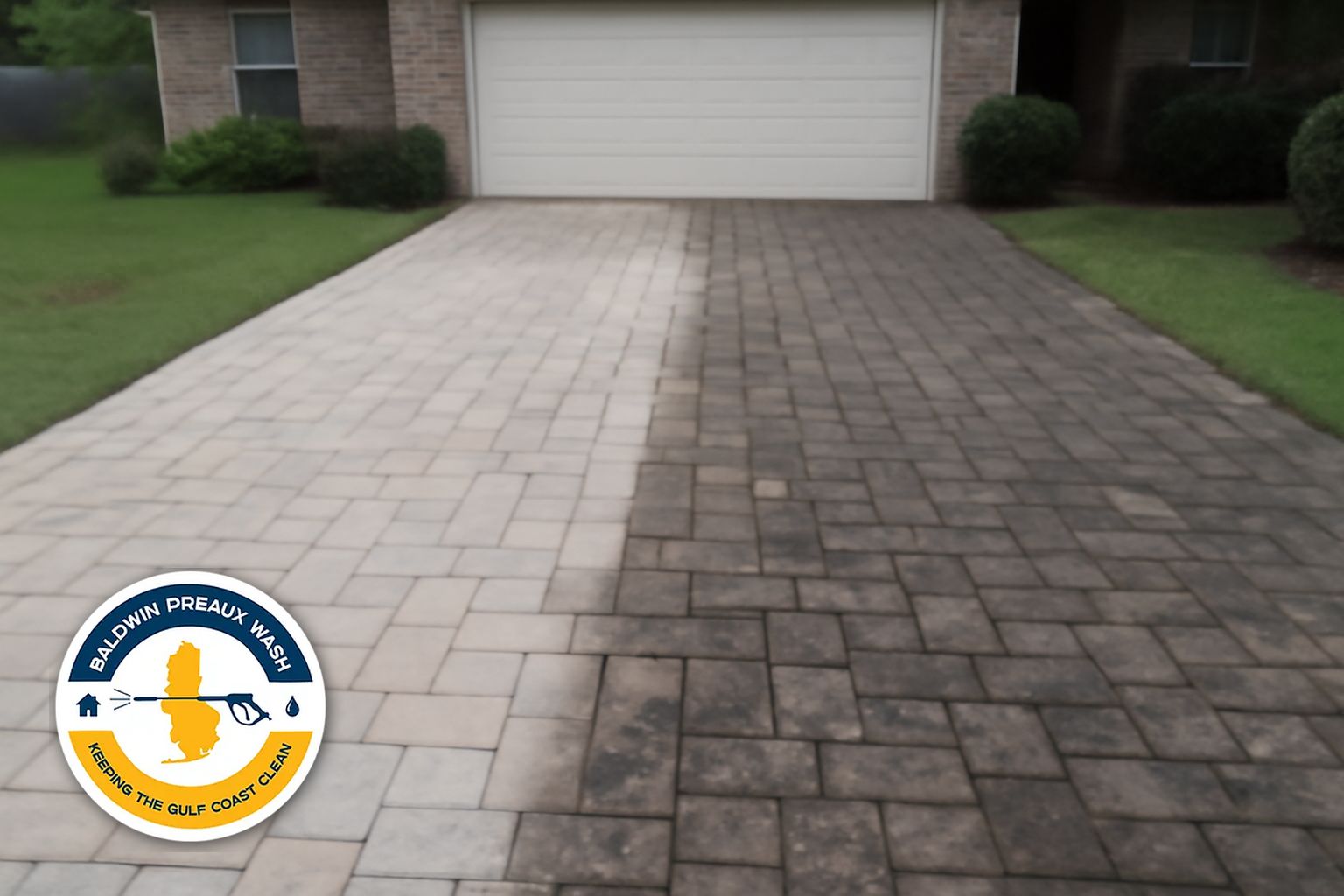
The short version: cleaning alone buys you time, but sealing locks in the results. When we clean pavers without sealing them, the surface is open and ready to collect whatever the next rainstorm blows in. When we clean and seal in the same visit, you're protecting the joint sand, slowing re-growth of algae, and giving the pavers a surface that sheds dirt instead of absorbing it. For homeowners in areas like Old Shell Road, Hillsdale, or over near the University of South Alabama corridor, a sealed paver surface means the next cleaning cycle is easier and less expensive.
What Paver Cleaning and Sealing Actually Involves
We start with a low-pressure rinse to loosen surface debris, then apply a professional-grade paver cleaner that breaks down organic growth, algae, mildew, moss, lichen, without damaging the paver face or washing out your joint sand prematurely. After the cleaner has had time to work, we do a controlled pressure wash at the right PSI for the specific paver type. Travertine, concrete pavers, and brick all need different settings. Once the surface is clean and fully dry, we apply a penetrating sealer or a wet-look topcoat depending on what the customer wants. The sealer goes into the paver material and stabilizes the joint sand at the same time.
Why Mobile Pavers Degrade Faster Than You'd Expect
Mobile gets around 65 inches of rain per year, more than Seattle, for context. That moisture never fully disappears from a paver surface because the humidity stays high even on sunny days. Algae spores that land on a dry surface somewhere else just blow away; here, they find enough moisture to take hold within days. If your paver driveway or back patio is under tree cover, like a lot of the older Spring Hill lots on Navco Road or off Airport Boulevard, you're dealing with shade that slows drying and speeds up biological growth. We've cleaned patios in 36608 that had a quarter-inch of slick green algae covering the entire surface by the second year after installation.
Common Problems We See on Mobile Pavers
- Green and black algae covering the paver face, especially in shaded areas
- Joint sand eroded or completely gone, leaving gaps where weeds take root
- Efflorescence, the white chalky deposits that leach out of concrete pavers over time
- Oil and grease stains on driveway pavers from vehicles
- Rust stains from irrigation heads or metal furniture sitting on the surface
- Faded color from UV exposure combined with organic staining
- Loose or sunken pavers caused by joint sand loss and water intrusion underneath
Mobile homeowners: get a free on-site quote for paver cleaning and sealing. We cover Midtown, Spring Hill, West Mobile, and surrounding areas. Call (251) 978-5503.
Sealing Options and What Each One Does
There's no single right sealer for every paver job in Mobile. The finish and the protection level depend on the paver material, the location, and what the customer is going for. Here's how we typically break it down when talking through options with homeowners.
Penetrating Sealers
A penetrating or impregnating sealer soaks into the paver and doesn't change the surface appearance much, it keeps the natural look but blocks water and staining agents from getting into the material. This is usually the right call for travertine, natural stone, or for customers who specifically want a matte finish. It's also the better choice in high-traffic areas because there's no topcoat to scratch or peel.
Wet-Look or Gloss Topcoat Sealers
A wet-look sealer sits on top of the paver surface and gives it that deep, saturated color that looks like the pavers just got rained on. Customers who want their backyard patio or pool deck to look showroom-sharp usually go this route. The trade-off is that topcoat sealers need to be reapplied more frequently, typically every two to three years depending on foot traffic and sun exposure, and if the surface isn't completely clean and dry before application, you can get cloudy patches or peeling.
Neighborhoods and Zip Codes We Serve in Mobile
Baldwin Preaux Wash runs paver jobs throughout Mobile County. We work in Spring Hill (36608), Midtown near the Oakleigh Garden District (36604, 36605), West Mobile and Tillman's Corner (36619), and out toward Theodore and Bellingrath (36582). If you're inside or near the Mobile city limits and you've got a paver driveway, walkway, pool deck, or patio that needs attention, we can get out there and take a look. Most quotes for paver cleaning and sealing are free and we can usually get eyes on the job within a couple of business days.
How Long Does the Whole Process Take?
For a standard back patio, plan on the cleaning taking one to two hours and the sealer needing four to six hours of cure time before foot traffic. Driveway jobs take longer depending on square footage. We schedule sealing jobs on days when rain isn't forecast for at least 24 hours, in Mobile that means we keep a close eye on the forecast and sometimes shuffle the calendar. We'd rather wait one more day than apply sealer ahead of a thunderstorm.
Ready to stop watching your pavers fade? Baldwin Preaux Wash serves all of Mobile. Call us at (251) 978-5503 or request a free quote online.
What to Do Before We Arrive
- Clear furniture, potted plants, and grills off the paver surface
- Let us know if any pavers are cracked, loose, or already missing so we can plan around them
- Turn off any irrigation zones that cover the paver area, we'll need the surface to stay dry after we rinse
- Keep pets indoors or away from the area during the job and for several hours after sealer application
- If there are stains you're especially concerned about, rust, oil, paint, point those out during the quote walk-through so we can address them directly
Questions about your specific pavers or surface? Call Baldwin Preaux Wash at (251) 978-5503, we're happy to talk through the job before you commit to anything.
Frequently Asked Questions
How often should pavers in Mobile, Alabama be cleaned and sealed?
In Mobile's climate, most pavers benefit from a cleaning every one to two years and a re-seal every two to three years. Shaded areas or surfaces under heavy tree cover may need more frequent cleaning because biological growth takes hold faster. After the first sealing, you'll notice the surface stays cleaner longer, so the intervals can sometimes stretch a bit.
Will pressure washing damage my pavers or blow out the joint sand?
It can, if done incorrectly. High PSI and a zero-degree nozzle aimed directly at the joints will absolutely erode sand and can pit softer paver faces. We use controlled pressure and appropriate nozzle angles for each paver type. Part of the reason we add fresh joint sand and then seal is to stabilize what's left and protect it going forward.
Can you clean and seal just part of a paver area, like a single section?
Technically yes, but we generally advise against it because the color difference between a freshly sealed section and the surrounding unsealed pavers can be noticeable. It's almost always worth doing the whole surface at once so the finish is consistent and you're not dealing with visible patchwork.
What causes white patches or chalky residue on my concrete pavers?
That's efflorescence, mineral salts that migrate up through the paver material and deposit on the surface as water evaporates. It's very common in Mobile because of the high moisture levels. We treat efflorescence with a specific cleaning solution before sealing. Sealing afterward slows the process but doesn't always stop it completely on pavers that have a heavy efflorescence problem.
Do you replace joint sand as part of the paver sealing job?
Yes. Before sealing, we add polymeric joint sand or standard joint sand (depending on the application) to any areas that have eroded. The sealer then helps lock the sand in place so it's more resistant to washout from rain and irrigation. If the sand loss is severe, we'll let you know during the quote so there are no surprises on the day of the job.
How soon can I use my patio or driveway after sealing?
Light foot traffic is usually fine after four to six hours with most sealers we use. Vehicle traffic on driveway pavers should wait at least 24 to 48 hours. We give you specific instructions based on the sealer product used and the weather conditions on the day of the job. If it's unusually humid or cooler than normal, cure time extends a bit.