If you own a home or rental property in Orange Beach, whether that is out on Ono Island, along Perdido Pass, or closer to Canal Road in the 36561 zip, your pavers are working in one of the toughest environments in Baldwin County. Salt air pulls the sealer out. Sand grinds into the joints. Algae and mildew move in fast during the wet months. By the time most homeowners notice, the pavers have gone from sand-colored and uniform to blotchy, slick, and faded.
Baldwin Preaux Wash does paver cleaning and sealing across Orange Beach and the surrounding Gulf Coast. We are not just rinsing things off with a wand and calling it done. We run a proper low-pressure pre-treat on the surface to break down bio-growth and embedded salt deposits, then do a controlled pressure rinse to clear the joints without washing out the sand. After the pavers dry completely, we apply a penetrating or wet-look sealer depending on what you have and what you prefer. The result holds up against the sun and salt better than a quick clean alone ever will.
Why Orange Beach Pavers Need More Than a Rinse
Most people think pressure washing means point a gun at it and walk away. On pavers, that approach causes real problems. Too much pressure blows joint sand out, loosens the base, and can chip older concrete pavers along the edges. We use the right PSI for the material in front of us, lower on older or tumbled pavers, a little more on dense travertine or modern concrete units that can handle it. The chemistry does most of the heavy lifting, not the pressure.
Orange Beach pool decks and patio pavers also tend to hold standing water longer because of how lots are graded near the water. That moisture sits in the joints and feeds algae and mildew colonies. A good seal creates a barrier that slows that process down. We typically recommend re-sealing every two to three years out here on the coast, sometimes sooner on a south-facing pool deck that gets full sun all day.
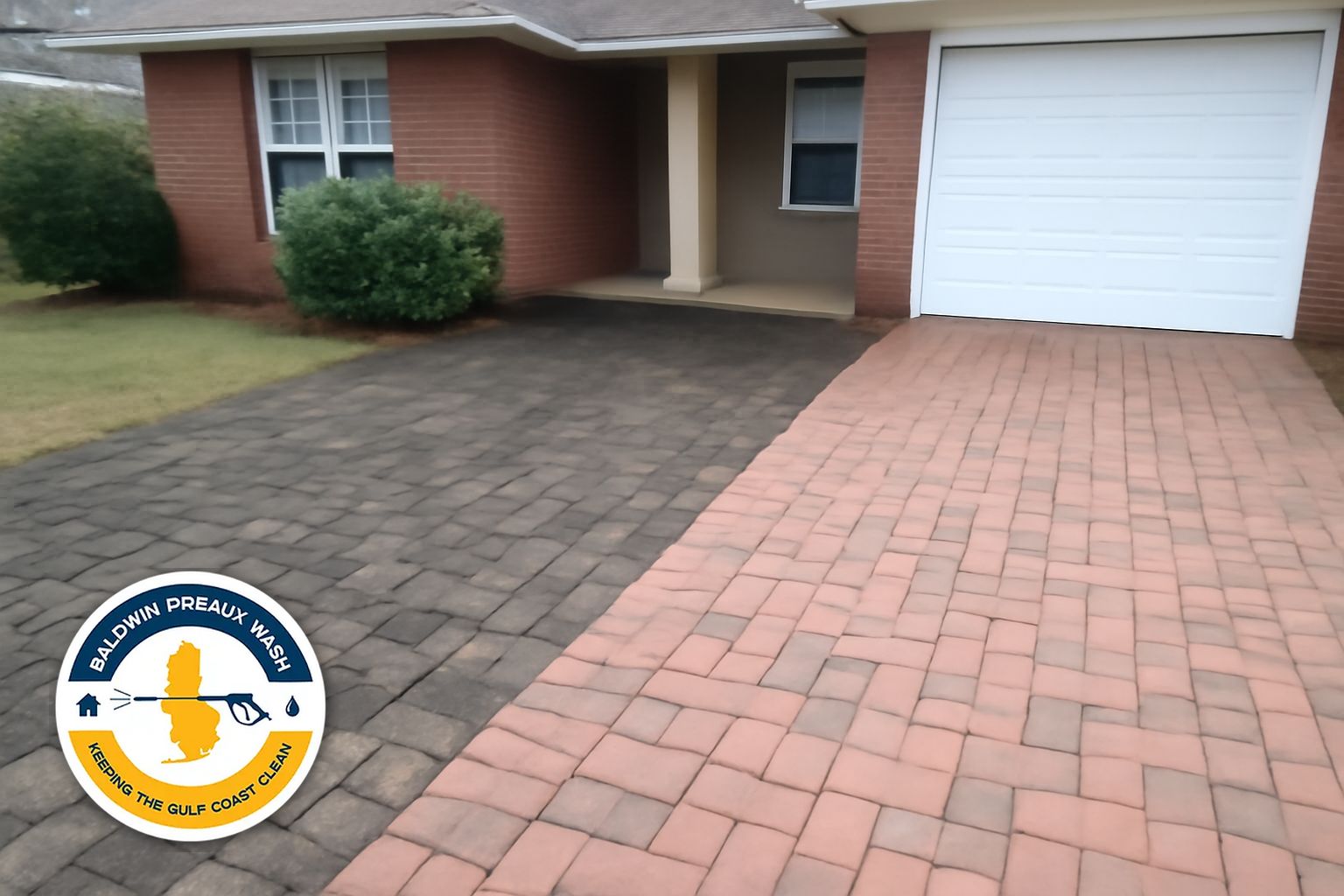
What the Paver Cleaning and Sealing Process Looks Like
We keep the process straightforward so there are no surprises on job day. Here is how it goes from start to finish.
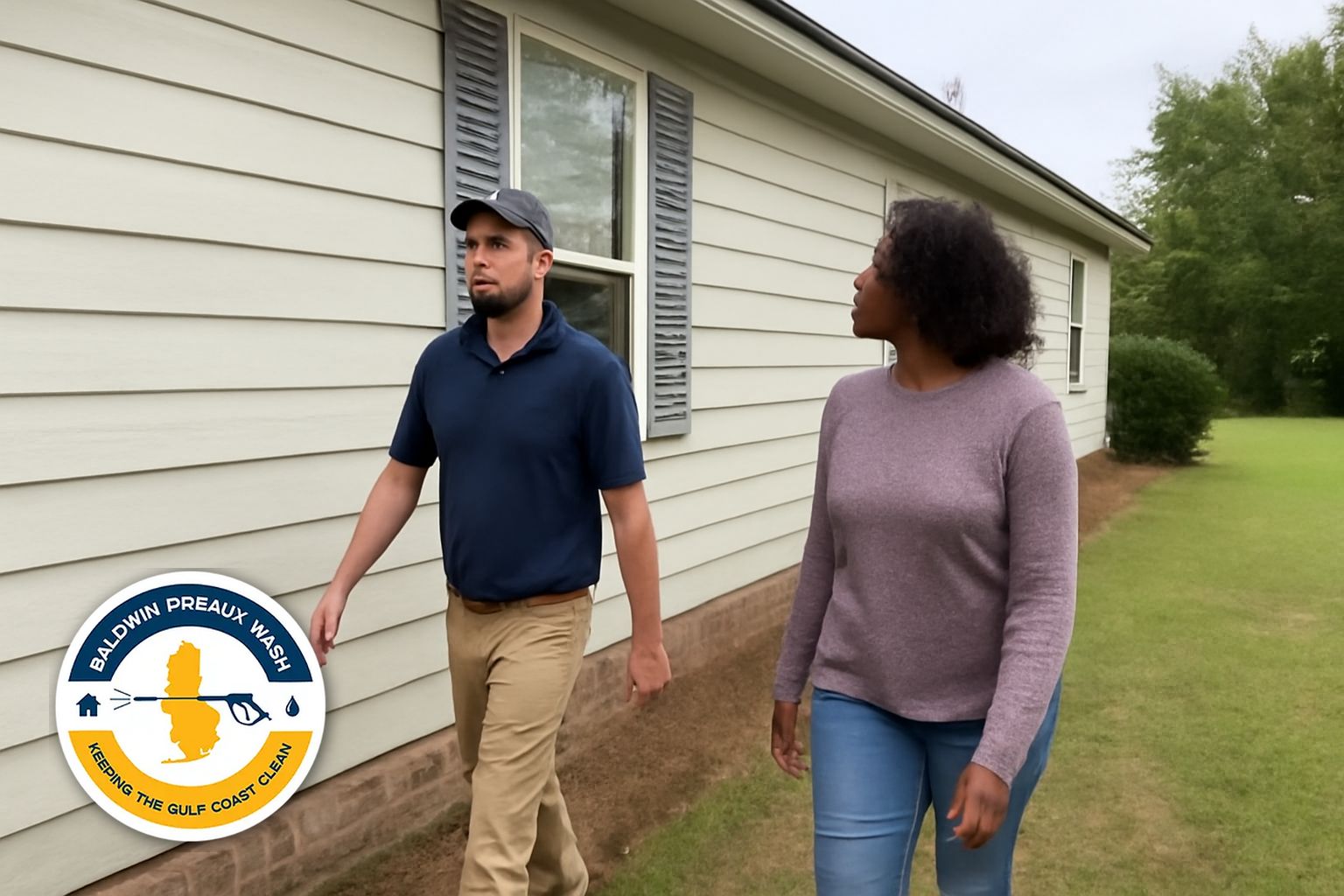
- Walk the surface with you before we start, we look for cracked or sunken pavers, compromised joints, and anything that needs attention before cleaning.
- Apply a biodegradable pre-treatment to dwell on the surface and break down algae, mildew, and salt residue.
- Low-to-mid pressure rinse using a surface cleaner or handwand depending on the paver layout and edge conditions.
- Re-sand the joints if needed after cleaning, this keeps the surface stable and prevents rocking pavers.
- Let the surface dry fully before sealer goes down, we do not rush this step, especially in the humidity of summer.
- Apply sealer in one or two coats depending on the porosity of the material and how long it has been since the last seal.
- Final walkthrough with you so you can see the result and ask questions before we load up.
We serve Orange Beach, Gulf Shores, and the rest of Baldwin County's Gulf Coast. Call (251) 978-5503 or use the form, we will get you a quote fast.
Areas We Cover in Orange Beach and Around the 36561 Zip
We run jobs all over the Orange Beach area, including Ono Island, the neighborhoods along Perdido Beach Boulevard, Canal Road, Terry Cove, and Wolf Bay. We also handle properties just across the Foley Beach Express corridor and out toward Gulf Shores on the 36542 side. If you have a vacation rental that turns guests over every week, we can work with your property manager to schedule cleanings between bookings. Curb appeal and safe, non-slip surfaces matter just as much for renters as they do for permanent residents.
Types of Pavers We Work With
- Concrete interlocking pavers, the most common type in Baldwin County subdivisions and around pool decks.
- Travertine, popular on higher-end pool areas, very porous, requires a lighter touch and the right penetrating sealer.
- Brick pavers, older properties near the beach sometimes have these; cleaning is gentle, sealer choice matters.
- Tumbled pavers, the irregular surface holds more grime, so the pre-treatment dwell time is longer.
- Natural stone, assessed case by case since porosity and hardness vary a lot.
Sealer Options: Wet Look vs. Natural Finish
We get asked about this a lot. The wet-look or gloss sealer makes the pavers look like they just got rained on, it deepens the color and gives a sheen. Some homeowners love it on a pool deck. Others prefer a natural or matte finish sealer that protects without changing the look. Both options work well in the coastal environment as long as the product is designed for exterior masonry and UV exposure. We carry both and will walk you through the trade-offs so you can decide what fits your property.
One thing to be aware of: gloss sealers can show tire marks on driveways and need to be reapplied a little more often than penetrating natural-finish sealers. On a high-traffic driveway, a penetrating sealer often holds up better long term. On a pool deck or back patio, the wet look tends to be more popular because it makes the space feel finished and clean.
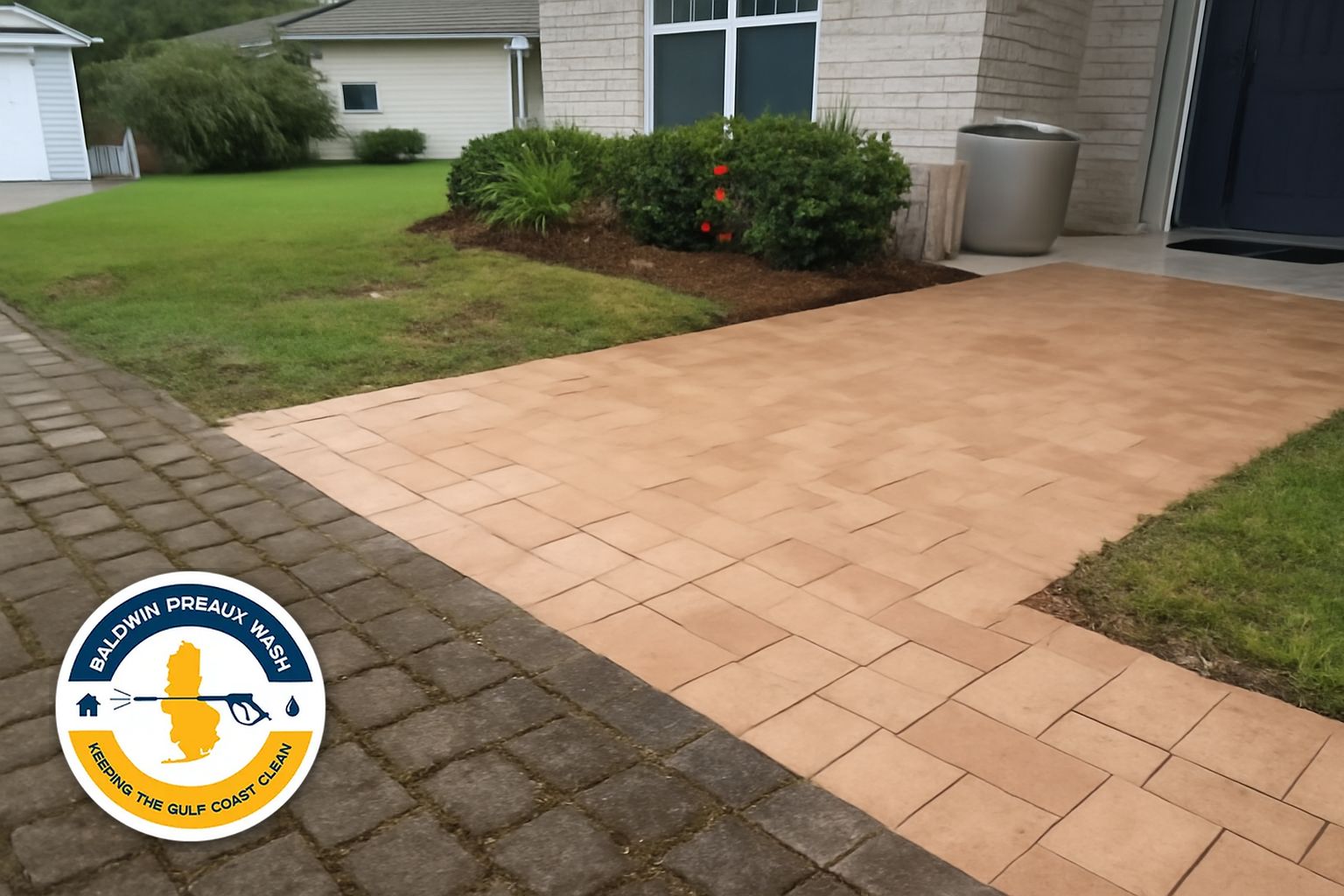
How to Know if Your Pavers Are Ready for Cleaning and Sealing
- The surface looks faded, gray, or blotchy compared to when it was installed.
- You see green or black streaks along the joints or in low spots.
- Water soaks into the pavers immediately instead of beading on the surface, old sealer has worn off.
- The joints are soft, loose, or missing sand in places.
- You have not had them cleaned or sealed in more than two or three years.
- Guests or family members have slipped on the pool deck after rain.
Ready to get Orange Beach pavers cleaned and sealed the right way? Baldwin Preaux Wash is local, licensed, and knows the Gulf Coast climate. (251) 978-5503.
If you are not sure whether your pavers need sealing or just cleaning, call us at (251) 978-5503 and describe what you are seeing. We can usually tell you over the phone what kind of service makes sense, or we can schedule a quick look before we quote anything. Baldwin Preaux Wash works all over Orange Beach and the 36561 area, and we are happy to answer questions without any pressure to book.
Frequently Asked Questions
How long does paver sealing last in Orange Beach's climate?
In the coastal environment around Orange Beach and the 36561 zip, expect a good sealer to last two to three years under normal conditions. South-facing pool decks with heavy sun exposure and high foot traffic may need attention closer to the two-year mark. A penetrating sealer on a shaded patio can sometimes go three years before the next application.
Can you clean and seal pavers on a vacation rental property between guest stays?
It depends on the window you have. A full clean and seal needs the surface to dry completely before the sealer goes down, in summer humidity that usually means at least four to six hours of dry weather after cleaning before we seal. If you have a gap of one to two days between guests, we can typically fit it in. Call us at (251) 978-5503 and we will work around your booking calendar.
Will pressure washing damage the joint sand in my pavers?
High, uncontrolled pressure will blow joint sand out. We use a surface cleaner and careful handwand technique to avoid that, and we can re-sand the joints after cleaning if needed. Replacing joint sand is part of the job on pavers that have not been maintained for a while.
Do I need to seal pavers or can I just clean them?
Cleaning alone will make them look better right away, but without a sealer the pavers will re-contaminate faster because the surface is open and porous. Near the coast, algae and salt deposits get back in quickly. Sealing after cleaning extends how long it stays clean and protects the paver from UV fading. We recommend doing both together when the timing and budget allow.
What is the difference between a wet-look and a natural-finish paver sealer?
A wet-look or gloss sealer deepens the color of the paver and leaves a visible sheen on the surface. A natural or matte-finish penetrating sealer soaks into the paver and protects it without changing the appearance. Both options protect against moisture and UV, but the penetrating sealer tends to hold up better on driveways with regular vehicle traffic. We carry both and can help you decide what fits your property.
How do I know if my pavers have been sealed before?
Pour a small amount of water on the surface. If it beads up and sits on top, there is still active sealer present. If it soaks in immediately and darkens the paver, the sealer is gone or nearly gone. You can also look for a sheen or slight color depth that would not be there on bare concrete. If you are not sure, we are happy to take a look when we are in the Orange Beach area.